
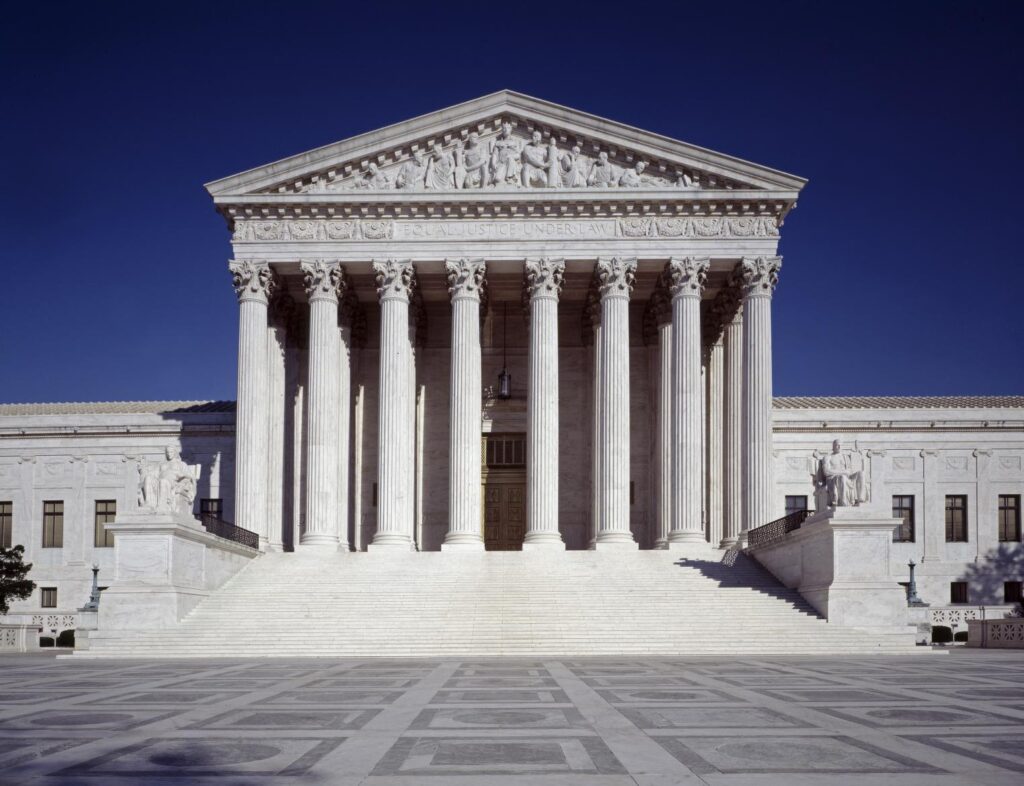
WASHINGTON — The U.S. Supreme Court on Jan. 13, 2026, heard arguments in two closely watched cases challenging state laws that restrict transgender athletes from participating in girls’ and women’s school sports.
The cases, Little v. Hecox and West Virginia v. B.P.J., test whether such laws violate the Equal Protection Clause of the 14th Amendment and, in the West Virginia case, Title IX, the federal law that prohibits sex discrimination in education.
In Little v. Hecox, the court is considering a challenge to Idaho’s Fairness in Women’s Sports Act. The case involves Lindsay Hecox, a biological man who sought to try out for Boise State University’s women’s track and cross-country teams but was barred under state law.
The second case, West Virginia v. B.P.J., centers on Becky Pepper-Jackson (B.P.J.) who is a 15-year-old biological male who had previously competed on school girls’ track and cross-country teams. After West Virginia Gov. Jim Justice signed House Bill 3293 into law — codified at W.Va. Code §18-2-25d — schools were required to designate sports teams based on biological sex at birth, preventing B.P.J. from continuing to compete on girls’ teams.
Attorneys representing the athletes argued the laws discriminate against transgender athletes and unlawfully exclude them from school sports. In West Virginia’s case, they also argued the law violates Title IX by denying transgender girls equal access to educational opportunities.
During nearly three and a half hours of oral arguments, several of the justices appeared sympathetic to the states’ position that separating teams by biological sex is necessary to preserve fairness in women’s sports.
“Sports are kind of a zero-sum game for a lot of teams,” Justice Brett Kavanaugh said. “Someone who tries out and makes it, who is a transgender girl, will bump someone from the starting lineup — and those things matter to people, big time.”
Idaho Solicitor General Alan Hurst told the court that biological sex remains a critical factor in athletic competition, citing differences in “size, muscle mass, bone mass, and heart and lung capacity.”
President Donald Trump also weighed in publicly after the arguments, saying, “I can’t believe it — some of the justices were fighting hard for men to be able to play in women’s sports.”
Since 2020, 27 states have enacted laws restricting transgender participation in girls’ and women’s school sports. New Mexico is among the 23 states that do not currently have a state law banning transgender athletes from competing based on biological sex.
If the Supreme Court rules that such bans are constitutional, New Mexico schools and athletic associations could face pressure to reconsider their current policies to align with the court’s interpretation of federal law.
The court has not yet issued a decision. A ruling is expected by late spring or early summer 2026, before the end of the current term.