
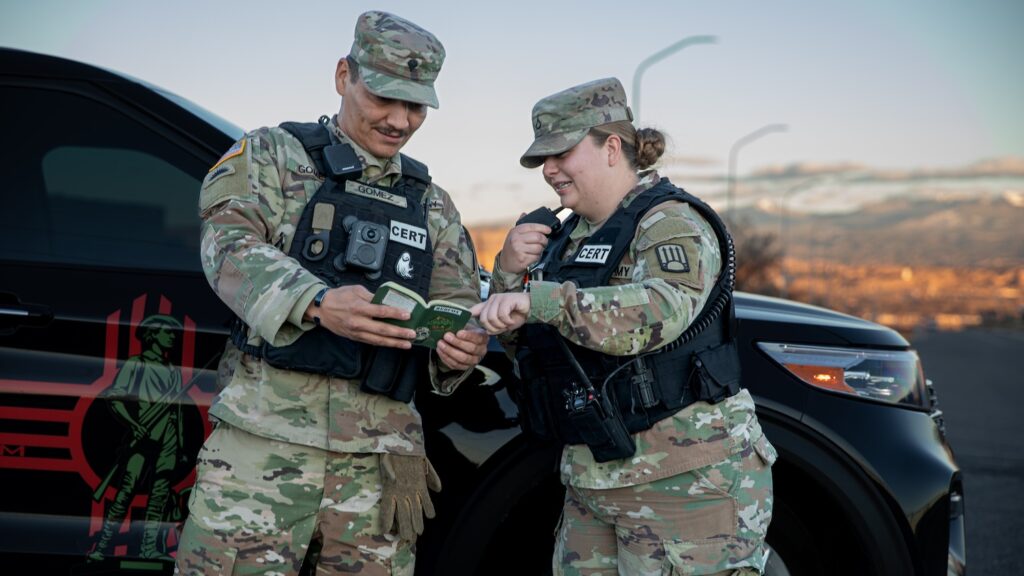
ALBUQUERQUE — A 2025 decision by Gov. Michelle Lujan Grisham to deploy the New Mexico National Guard to Albuquerque did not lead to a clear or lasting reduction in crime, according to city data, raising questions about the effectiveness of the strategy amid disagreements between state and city leaders.
Lujan Grisham ordered the deployment after citing rising violent crime and staffing shortages at the Albuquerque Police Department. National Guard members were assigned to support roles such as traffic control, security and administrative duties, allowing police officers to focus on patrols and investigations. Guard members were not given arrest powers and did not respond to emergency calls.
State officials said the deployment was intended as a temporary measure to stabilize conditions while longer-term public safety strategies continued.
Crime data released in the months following the deployment showed no clear or sustained drop that could be tied to the Guard’s presence. During that same period, Albuquerque Mayor Tim Keller said crime was already trending downward and questioned whether the deployment was necessary, pointing to ongoing local efforts to address public safety.
The differing public statements from the governor and the mayor highlighted tension between state and city leadership. City officials emphasized investments in police recruitment, violence intervention programs and behavioral health services, while the governor maintained that immediate action was needed to address public safety concerns.
The limited role of the Guard also drew public scrutiny. Because Guard members were restricted to non-law-enforcement duties, public safety experts said it was difficult to measure a direct impact on crime.
A separate National Guard deployment later authorized in Española unfolded under different circumstances. In that case, local officials publicly requested state assistance and worked closely with the governor’s office to define how Guard members would support police operations.
In Española, city leaders publicly supported the deployment and worked with state officials to define the Guard’s support role, including traffic control and scene security. In Albuquerque, public disagreement between state and city leadership shaped how the deployment was carried out and evaluated.
As New Mexico officials continue to debate how best to address crime, the outcomes in Albuquerque and Española are likely to shape future decisions about the use of the National Guard.