
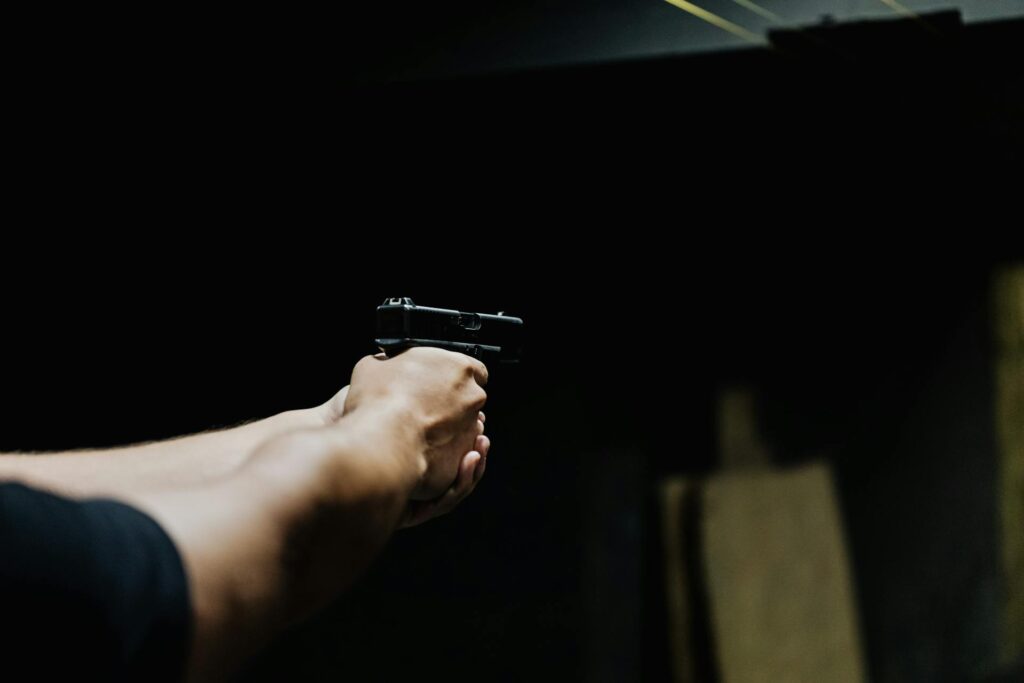
SANTA FE — A controversial measure that would ban the sale of many common semi-automatic firearms and impose “draconian” costs on small businesses narrowly advanced through the Senate Judiciary Committee on Wednesday, despite the Chairman’s own admission that the bill is likely unconstitutional.
Senate Bill 17, the Stop Illegal Gun Trade Act, cleared the committee on a 6-3 party-line vote. The bill seeks to prohibit the future sale of “military-grade” weapons—a definition that critics argue encompasses the most popular firearms used by law-abiding New Mexicans for self-defense and hunting—and mandates expensive new security protocols for local gun shops.
A “Failure of Duty”
The most striking moment of the hearing came when Committee Chairman Joseph Cervantes (D-Las Cruces) acknowledged that the bill’s primary mechanism is legally flawed. Under recent U.S. Supreme Court precedents, state-level bans on commonly owned firearms have faced stiff legal challenges.
“Last year my conclusion was that this bill would be unconstitutional and remains my opinion,” Cervantes told the committee.
Despite his legal assessment, Cervantes joined his Democratic colleagues in voting to advance the bill, sparking a sharp rebuke from Senator Crystal Brantley (R-Elephant Butte). Brantley, who moved to strip the firearm ban from the bill, called the vote a “failure of duty” and an abandonment of the oath of office to uphold the Constitution.
“This bill is restricting some of the most commonly owned firearms in New Mexico,” Brantley argued. “It does not reconcile with the Heller decision… we are going to find ourselves with this law on the steps of another courthouse.”
Small Businesses in the Crosshairs
While proponents framed the bill as a tool to stop “straw purchases,” opponents and industry experts warned that the legislation targets legitimate business owners rather than the criminals fueling the state’s crime crisis.
Senator James G. Townsend (R-Artesia) pressed sponsors on whether they believed criminals would respect new regulations. “Do you believe criminals follow the law?” Townsend asked, suggesting the bill does nothing to deter those already operating outside the legal system.
Local business owners provided staggering testimony regarding the financial burden of the bill’s “site hardening” requirements. The mandate for high-definition surveillance systems and two-year data storage could cost a small shop between $60,000 and $75,000.
Nick Sanchez, a rancher and business owner, noted that these costs exceed the annual net profit of many “mom and pop” stores. “They won’t be able to stay open with those kind of figures,” Sanchez testified, calling the bill a “frivolous” attempt to drive licensed dealers out of business.
Constitutional and Legal Conflicts
The National Rifle Association (NRA) and the National Shooting Sports Foundation (NSSF) testified that the bill creates a “backdoor registry” by forcing the state to permanently retain purchaser identities and serial numbers—a practice they claim conflicts with federal law.
Critics also pointed to Section 8 of the bill, which could charge a dealer with a fourth-degree felony for technical paperwork errors. Nick Tuccio, state director for the NRA, warned that this “zero-tolerance” approach punishes law-abiding citizens for clerical mistakes while failing to address repeat offenders and gang violence.
The bill now moves to the Senate floor, where it is expected to face a robust debate over its economic impact and its adherence to the Second Amendment.