
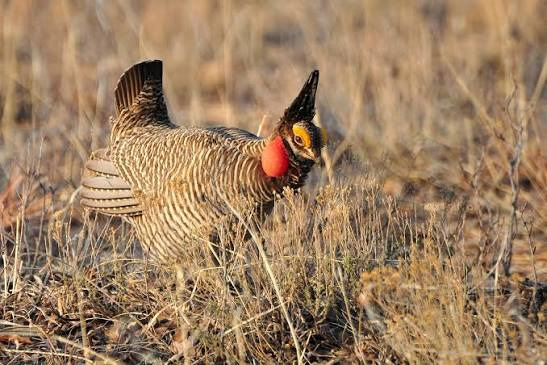
SANTA FE — A federal court decision involving the lesser prairie chicken is drawing praise from New Mexico agricultural and energy leaders, who say the ruling represents a win for private property rights and economic stability across eastern New Mexico.
The case centers on the federal listing of the lesser prairie chicken under the Endangered Species Act, a designation that has carried regulatory implications for ranchers, farmers and oil and gas producers operating within designated habitat areas.
Supporters of the ruling argue the listing imposed sweeping restrictions with significant economic consequences.
“This victory is a triumph for New Mexico’s hardworking ranchers and energy producers,” said Sen. Pat Woods, R-Broadview. “The Court’s decision supports the vitality of our state’s agricultural and oil and gas sectors, which are the backbone of our economy and way of life. It reflects a commonsense approach to balancing conservation with the needs of our communities.”
The lesser prairie chicken, a grassland bird native to portions of eastern New Mexico and other Great Plains states, has been at the center of a years-long debate between conservation groups and industry advocates. Federal wildlife officials previously determined the species faced ongoing habitat loss and population declines, prompting formal protections.
Critics of the listing say the process unfairly targeted private landowners.
“The listing of the lesser prairie chicken was never about protecting the species. It was always about controlling more private property,” said Margaret Byfield, executive director of American Stewards of Liberty. “They used this listing process to scare landowners into voluntarily restricting their land, and then listed the species anyway, giving them control over all the habitat they determined was necessary. The LPC case is a clear example of the many problems with the Endangered Species Act.”
Environmental advocates have argued that federal protections are necessary to prevent further population decline and long-term species collapse. The bird’s habitat has been fragmented by agricultural conversion, energy development and infrastructure expansion across the southern High Plains.
The ruling is expected to have implications not only for conservation efforts involving the lesser prairie chicken but also for how the Endangered Species Act is applied to species whose habitat overlaps with privately owned working lands.
Further legal and regulatory action could follow as federal agencies review next steps.