
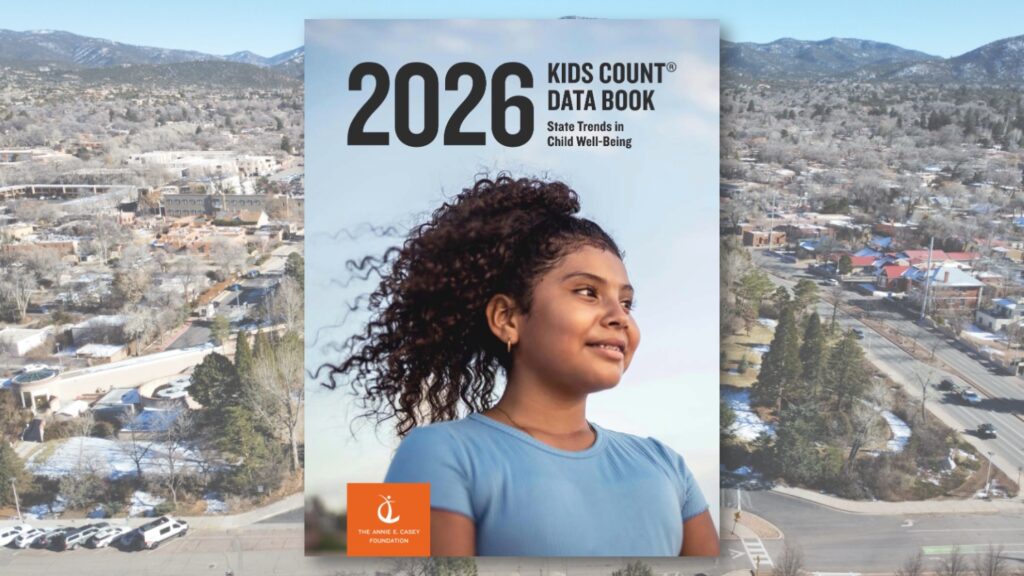
SANTA FE — New Mexico continues to rank near the bottom nationally for child well-being, according to the 2026 Kids Count Data Book, even as the state showed improvement in several measures related to poverty and high school graduation rates.
The annual report from the Annie E. Casey Foundation ranked New Mexico 49th overall among the 50 states, placing ahead of only one state in overall child well-being. The state received an overall score of 281, an improvement from its 2019 baseline but still among the lowest rankings nationwide.
The report evaluates child well-being across four categories: economic well-being, education, health, and family and community factors. While New Mexico posted gains in several economic indicators, the state continued to struggle in education and family outcomes, where it ranked last nationally.
The findings highlight a mixed picture for New Mexico’s children. Child poverty declined from 25% in 2019 to 22% in 2024, while the share of teens who were neither in school nor working fell from 11% to 8%. The percentage of children whose parents lacked secure employment also improved slightly, dropping from 32% to 31%.
At the same time, housing affordability worsened. The share of children living in households with a high housing cost burden increased from 26% to 27%, reflecting broader concerns about rising housing costs across the state.
Education remained New Mexico’s weakest area. The state ranked 50th in the nation on education measures, with several indicators moving in the wrong direction. Sixty percent of New Mexico children ages 3 and 4 were not enrolled in school during the 2020–24 period, up from 55% in the 2015–19 period. Reading and math proficiency also declined. According to the report, 80% of fourth graders were not proficient in reading in 2024, compared with 76% in 2019. Among eighth graders, 86% were not proficient in math, up from 79% five years earlier.
One bright spot was high school completion. The percentage of students not graduating on time improved from 25% to 22% between the 2018-19 and 2023-24 school years.
In health outcomes, New Mexico ranked 41st nationally. The rate of low birth-weight babies improved slightly, decreasing from 9.3% to 9.2%, while the share of children without health insurance remained unchanged at 6%. However, child and teen deaths increased from 36 to 37 per 100,000 children, and the percentage of youth ages 10 to 17 who were overweight or obese rose from 33% to 34%.
The report also found mixed results in family and community measures. New Mexico ranked last nationally in the category despite improvements in teen birth rates. The state’s teen birth rate declined from 24 births per 1,000 teens in 2019 to 18 in 2024. Meanwhile, 44% of New Mexico children lived in single-parent families, a figure unchanged from five years earlier, and one in five children continued to live in high-poverty areas.
The Kids Count Data Book is widely used by policymakers, educators and child advocates to track trends affecting children and families. The 2026 edition suggests that while New Mexico has made progress in reducing poverty and improving some economic indicators, significant challenges remain in education, health and broader measures of child well-being.