
EUNICE — Federal agriculture officials have confirmed New Mexico’s first case of New World screwworm in nearly 60 years, detected in a small-breed male dog living in Eunice, in Lea County.
The case was initially counted as a Texas detection because the dog’s veterinarian practices across the state line in Andrews, Texas. USDA’s Animal and Plant Health Inspection Service reclassified the case on Sunday after confirming the dog resides at a household in Lea County, making it the first confirmed New Mexico detection.
The case is the fourth confirmed in the United States since the parasite crossed the border. New Mexico Agriculture Secretary Jeff Witte disclosed the detection at a virtual news conference on Monday. The same day, the USDA confirmed an additional case in a goat in Gillespie County, Texas, bringing the total active U.S. case count to five.
The dog, described only as a small-breed male, was still receiving treatment in Texas as of Monday. Witte said the state’s focus remains on early detection so federal resources — including sterile flies and veterinary stockpile products — can be deployed quickly.
The New Mexico Livestock Board issued an emergency declaration Tuesday, allowing for additional state and federal assistance. State and federal officials established a 12-mile quarantine zone around the Eunice residence where the case was confirmed. Because the dog’s recent travel and exposure history remain unknown, USDA and state partners have initiated inspections of animals in close proximity to the dog’s home and increased outreach in the surrounding area.
USDA Secretary Brooke Rollins, in a post on X, said the food supply is not at risk and pointed to the administration’s buildup since taking office.
“As of last Wednesday, when our first New World screwworm case was confirmed, USDA had over 100 staff working on preparedness and response — a team we built over the last 14 months in anticipation of this moment,” Rollins wrote, adding the agency has committed $1.3 billion for new infrastructure and sterile fly facilities. “We beat screwworm in the ’60s, and we will beat it again.”
State Sen. Crystal Brantley, R-Elephant Butte, who attended a New Mexico cattle growers’ meeting this week, said the outbreak has sharpened focus on the state’s agricultural backbone.
“We know our rural economies are vital to our overall economy in New Mexico,” Brantley said. “And so making sure our farmers and ranchers and our livestock stay safe is a priority.”
State Sen. Candy Spence Ezzell, in a Facebook post Monday, urged New Mexicans not to limit their concern to cattle operations.
“This is not just a cattle issue,” Ezzell wrote. “Screwworm can affect all kinds of livestock, wildlife, and yes, your dogs and cats too. If you notice any animal with an unusual wound or acting like something is not right, do not brush it off. Report it and get it looked at.”
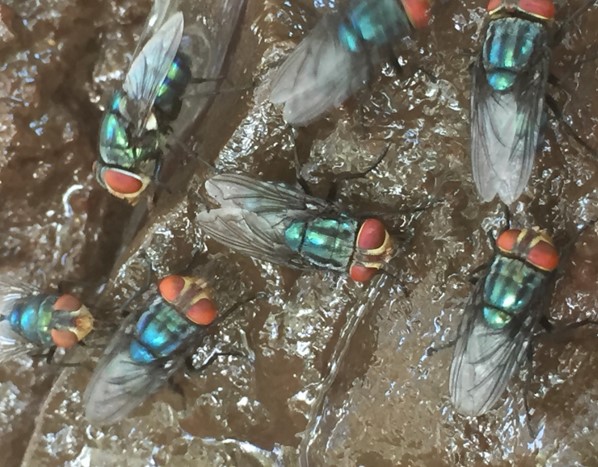
New World screwworm first reemerged in Chiapas, Mexico, in November 2024 and has since spread northward. The parasite’s larvae feed on the living tissue of warm-blooded animals and can cause severe wounds, suffering, and death without early treatment. The pest was declared eradicated in the United States in 1966.
State officials are scheduled to hold a public informational meeting at the Eunice Community Center at 6 p.m. Thursday, with representatives from the state departments of agriculture, wildlife, and health on hand to answer questions. Updates are available at screwworm.gov.