
SANTA FE — A new Legislative Finance Committee audit released Monday finds New Mexico’s food assistance program has one of the highest payment error rates in the country, a decade-long failure that state lawmakers say could cost New Mexico up to $173 million per year and is now drawing accountability demands from both chambers of the Legislature.
The audit, Program Evaluation No. 26-01, examined the Health Care Authority’s administration of the federal Supplemental Nutrition Assistance Program and found the state’s payment error rate has climbed from a low of 3.7% in federal fiscal year 2012 to a preliminary 16.6% in FY25 — the fifth worst rate in the country and well above the national average of 10.9%.
New Mexico administers SNAP benefits to more than 250,000 cases and has the highest SNAP participation rate in the nation, with roughly one in five residents enrolled. The program delivers approximately $1 billion in federal food assistance annually to the state.
The error rate matters because Congress, through the budget reconciliation measure known as H.R. 1, created a new cost-sharing structure that requires states with high payment error rates to cover a portion of benefit costs with state dollars. Under the new formula, states with error rates above 10 percent must cover 15 percent of SNAP benefit costs — a figure that translates to roughly $173 million per year for New Mexico.
New Mexico’s error rate is high enough to qualify for a temporary delay in those penalties, but auditors warned the clock is running.
The audit found payment errors are overwhelmingly overpayments to recipients and are primarily driven by inaccurate, incomplete, or outdated information on household income, family size, and income deductions. Wages and salaries accounted for 33 percent of identified payment errors in fiscal 25, followed by household composition at 18 percent and income deductions for shelter costs at 17 percent.
Critically, the LFC found HCA has relied on self-reported data for household composition — one of the largest error categories — without checking it against databases the state already has access to, including motor vehicle records and Medicaid files. The audit noted 94 percent of SNAP recipients in New Mexico are also enrolled in Medicaid, meaning cross-program data checks are technically feasible.
The LFC also found the program’s Office of Inspector General investigated only 3 percent of fraud tips received since 2018, completed investigation reports fell 40 percent from 2020 to 2025, and New Mexico recorded the lowest number of SNAP fraud disqualifications of any state in the country — just 18 in fiscal 23, compared to a national average that would have produced roughly 480 given the state’s participation rate.
The Legislature poured tens of millions into HCA’s Income Support Division in recent years, including a $51 million appropriation in fiscal 27 for additional caseworkers and technology upgrades. The audit found no correlation between caseload size and error rates, and noted that caseloads have actually declined since peaking during the COVID-19 pandemic, while error rates continued rising.
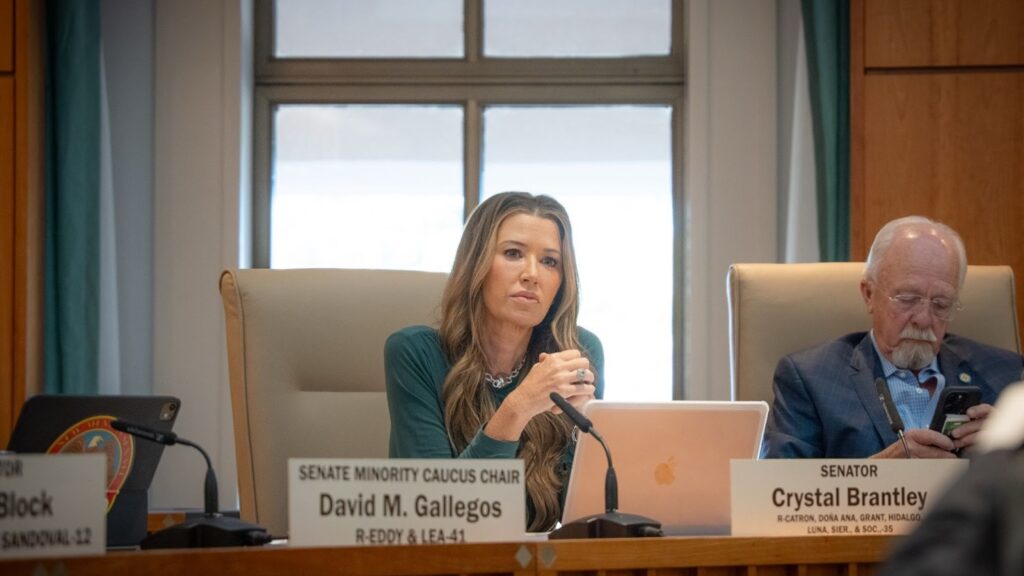
“Today’s report is not a surprise to anyone who has been paying attention,” said Sen. Crystal Brantley, R-District 35. “We told the LFC what to look for. We introduced a bill to fix the eligibility gap. We have been raising these alarms for years. What we have not had is the political will to act on them.”
Brantley continued: “Eliminating fraud, waste, and abuse from this program is not some Republican talking point — it is the difference between a SNAP program that is still standing in ten years and one that is not. A $173 million annual liability is not a rounding error. That is a new school. That is road repairs that don’t happen. That is healthcare that doesn’t get funded. Every dollar we lose to a broken eligibility system is a dollar that cannot go to the families and communities that actually need it.”
House Republicans echoed the concern in a statement released Monday. “The message from this audit is simple: New Mexico has created a SNAP program that is easier to game than it is to verify,” the caucus said. “Taxpayers are footing the bill while state officials look the other way. A system that rarely verifies, seldom audits, and barely investigates fraud is a system designed to fail.”
Senate Republican Whip Pat Woods, R-Broadview, framed the findings as a pattern of institutional failure.
“This audit doesn’t describe a system that failed by accident. It describes a system that state officials allowed to fail, year after year, while they kept asking taxpayers for more money to fix a problem they were never seriously trying to fix,” Woods said. “When you let an error rate climb for over a decade, when you keep relying on the honor system instead of checking the facts, and when you keep handing out more money instead of demanding results, that is not incompetence anymore. That is enabling behavior. State officials enabled this, and now New Mexico taxpayers are on the hook for it.”
HCA Secretary Kari Armijo, in a written response to the LFC included in the audit, said the agency agrees with many of the report’s recommendations and has already begun implementing several, including a March 2026 overhaul of field office performance management, a May 2026 rule change eliminating self-attestation for income deductions, and the launch of proactive pre-disposition case reviews in June 2026. The agency also noted that EBT card replacement from magnetic stripe to chip technology is scheduled to begin in July 2026.
HCA did not respond to a request for additional comment.
In her written response, Armijo cautioned that SNAP eligibility determination is among the most administratively complex public assistance processes, requiring caseworkers to apply evolving federal rules while evaluating diverse and often changing household circumstances. On household composition verification, HCA noted that motor vehicle data is not real-time and may be outdated, and that no single data source can definitively confirm household composition under federal rules.
Vincent Torres, executive director of the America First Policy Institute’s New Mexico chapter, said the findings demand action.
“Today’s evaluation confirms that New Mexico’s administration of SNAP is failing and can no longer go unaddressed,” Torres said. “The state’s payment error rate has climbed to 14.6 percent — among the highest in the nation — and now threatens to cost taxpayers up to $173 million a year, money that should go to education, public safety, and health care. As the report makes clear, these errors come from the state’s own processing mistakes and program administration choices, not from caseloads or underfunding. AFPI–New Mexico supports commonsense reforms, as well as closing the Broad Based Categorical Eligibility loophole, to strengthen oversight, verify eligibility data, and protect both taxpayer dollars and the safety net for the New Mexicans who need it most.”
The LFC recommended HCA strengthen field office performance management, require regular data checks of self-reported eligibility information, publish and annually update a definitive SNAP policy handbook, conduct proactive pre-disposition case reviews, and enhance its use of data analytics and fraud risk assessments. The Legislature was separately urged to consider requiring HCA’s Office of Inspector General to publicly report its investigative metrics annually.
LFC Director Charles Sallee requested HCA submit plans to address the audit’s recommendations within 30 days of Monday’s hearing.