
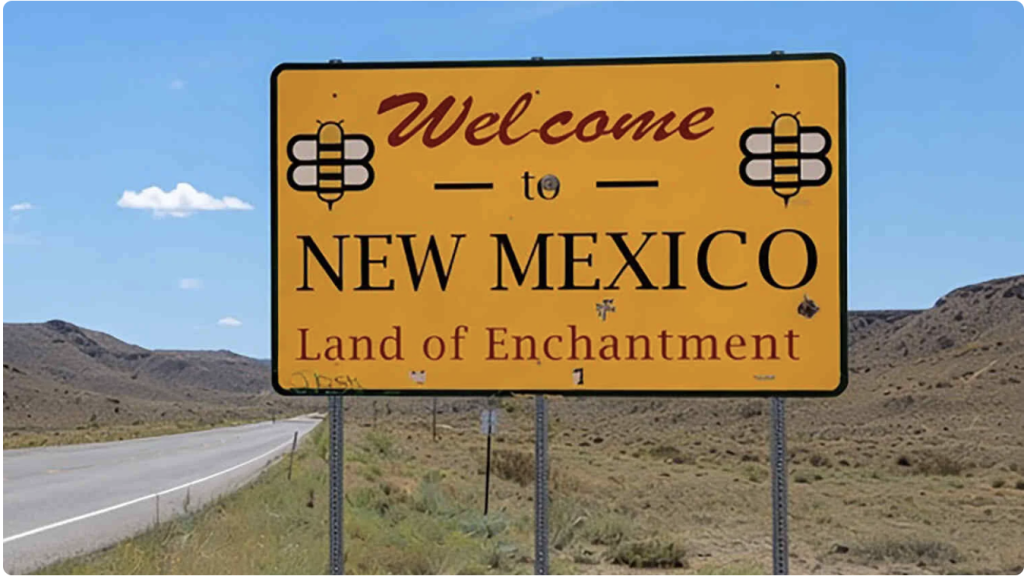
SANTA FE, N.M. — The Babylon Bee has filed a federal lawsuit challenging a New Mexico law requiring disclaimers on certain political content created with artificial intelligence, arguing the requirements violate the First Amendment by forcing the satirical publication to label jokes and parody.
Alliance Defending Freedom attorneys filed the lawsuit Tuesday in U.S. District Court for the District of New Mexico on behalf of the Babylon Bee. The case, The Babylon Bee v. Castillo, names members of the New Mexico State Ethics Commission, which has enforcement authority under the state’s Campaign Reporting Act.
At issue is House Bill 182, a 2024 law that amended the Campaign Reporting Act to regulate the use of artificial intelligence in election-related communications. The measure requires certain advertisements generated in whole or in part using AI to include a disclaimer identifying the content as manipulated or generated by artificial intelligence.
The law also regulates what it calls “materially deceptive media,” including AI-generated images, video or audio depicting an identifiable person saying or doing something that did not occur. For video, required disclosures must remain visible throughout the video. Still images must carry a clearly readable disclosure, while audio disclosures must be spoken. Separate provisions prohibit intentionally distributing deceptive media within 90 days of an election when it is intended and reasonably likely to mislead voters.
The Babylon Bee, which regularly publishes political satire and uses AI-generated images and videos, argues those requirements improperly extend to parody that reasonable viewers would recognize as fictional.
“New Mexico is stuffing words into our mouths, forcing us to say things we wouldn’t say otherwise,” Babylon Bee CEO Seth Dillon said in a statement about the lawsuit.
The dispute has particular significance in New Mexico because state officials previously raised constitutional concerns about HB 182.
A legislative analysis prepared before the law’s passage noted that the New Mexico Attorney General’s Office already warned the measure could potentially be challenged as improperly infringing on political speech. The Secretary of State’s Office, meanwhile, supported greater transparency around AI, saying disclosures could help voters identify misinformation and build trust in the election process.
Attorney General Raúl Torrez went further in a 2025 legal opinion examining the law. His office concluded that applying the disclaimer requirement to satire and parody was “likely unconstitutional on its face,” reasoning that recognizable satire is unlikely to deceive a reasonable viewer and that the disclosure requirement was therefore not sufficiently connected to the state’s interest in preventing deception.
The State Ethics Commission disputes the premise of the lawsuit.
“Babylon Bee’s pre-enforcement lawsuit is baseless,” a commission spokesperson said, noting the commission has never enforced the AI-disclaimer provision against political parody or satire.
The Babylon Bee is asking the court to declare the challenged provisions unconstitutional and block the commission from enforcing them. The case could determine how far New Mexico may go in regulating AI-generated election content while protecting political satire and other speech under the First Amendment.