
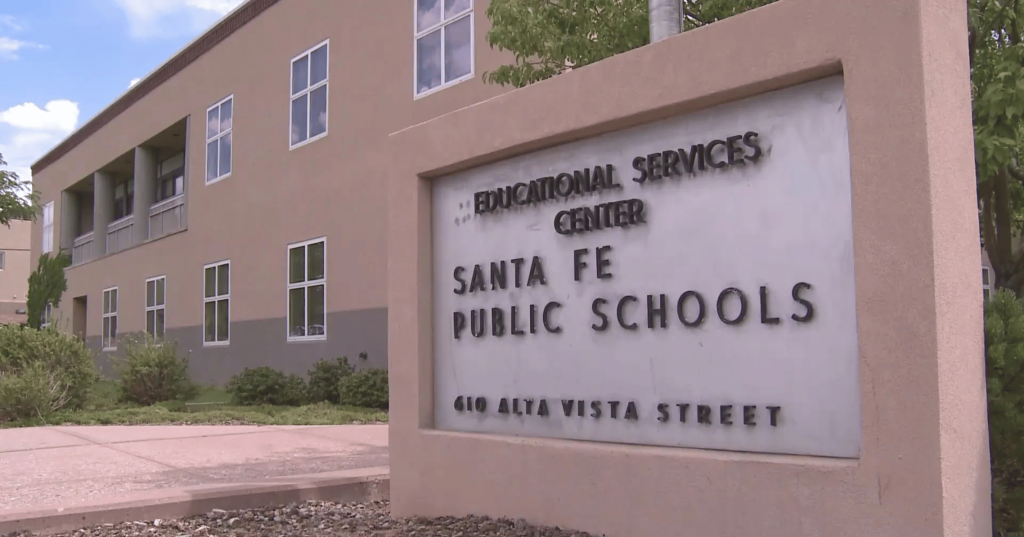
SANTA FE, N.M. — Santa Fe Public Schools has revised its gender support rules to require parents to participate in formal Gender Support Plans, giving parents a larger role than they had under previous district guidance.
But the change applies to only part of the district’s process.
Under guidance amended Aug. 20, a parent or guardian must participate when a student wants a preferred name or gender marker entered into the district’s PowerSchool system. The district can still use a student’s requested name and pronouns at school without a formal Gender Support Plan or parental involvement.
The revised rules also do not create a notification process for parents of other students who may share restrooms, locker rooms, overnight accommodations or other facilities with a student receiving gender-related accommodations.
The changes follow concerns raised by Santa Fe mother Kristy Ojinaga, who previously said she learned only after questioning school officials that a biologically male classmate of her then-6-year-old daughter had a gender support plan and was permitted to use the girls’ restroom.
The district’s September 2025 guidance, which Ojinaga said was in effect at the time, instructed staff to ask a student whom they wanted at a Gender Support Meeting. Family members could participate if the student chose to include them. The older policy did require parental consent and attendance before a student’s name or gender marker could be changed in PowerSchool.
The August revision makes parental participation mandatory for a formal Gender Support Plan connected to those changes.
“I learned the hard way what happens when schools decide they know better than parents,” Ojinaga said in a statement to the New Mexico Sentinel. “This change is a step forward, but it doesn’t fix the fundamental problem. Santa Fe Public Schools now says parents must be involved in a formal Gender Support Plan, while still allowing staff to use a child’s new name and pronouns without a parent’s involvement. That isn’t parental partnership—it’s a loophole big enough to keep parents in the dark about what is happening with their own child.”
The distinction is spelled out in the updated district documents.
A formal Gender Support Plan is required when a student seeks to have a preferred name or gender marker displayed in the student information system. However, the district’s amended administrative regulation says students must be addressed by their requested name and pronouns in day-to-day interactions regardless of whether that information has been entered into the system.
The guidance also allows an initial gender support meeting to take place with the student and school staff. Parents are only specifically required when the process moves to a formal Gender Support Plan involving the student information system.
That means parental involvement has increased, but it is not required for every form of gender-related support a student may receive at school.
Ojinaga said the policy also leaves unresolved the role of parents whose children may be affected by another student’s accommodations.
“And there’s another glaring question: what about the parents of the other children affected by these plans?” she said. “I have yet to see any change that gives those parents notification or requires their involvement when their child’s privacy, safety, or well-being may be affected. In fact, the district acknowledges that it has no specific process for evaluating how these plans affect other students.”
The updated district guidance says staff may not disclose a transgender student’s information to parents of other students, citing the Family Educational Rights and Privacy Act. It adds an exception allowing a student’s own parent or guardian to obtain information about that student through a direct request.
The amended regulation continues to generally base restroom and locker room access on the gender marker listed in the student information system. It also says students generally may participate in sex-separated overnight activities according to the gender identity listed in that system, while directing staff to consider the safety and comfort of all students on a case-by-case basis.
“Parents have a right to know,” Ojinaga said. “They have a right to be involved. And they should never be treated as an obstacle to their own child’s well-being. SFPS cracked the door open to parents. Now it needs to stop gatekeeping and let us in.”
Neither the amended regulation nor the updated guidance establishes a process for notifying parents of other students when gender-related accommodations involve shared facilities or activities.