
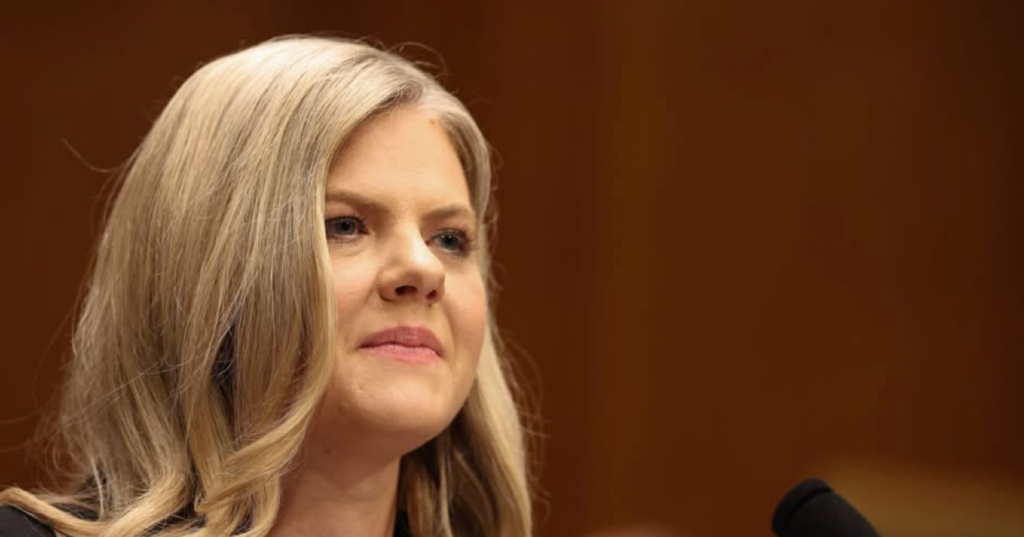
WASHINGTON — Dr. Heidi Overton, a Gallup High School graduate who went on to earn her medical degree from the University of New Mexico, defended her record and emphasized her commitment to science Thursday as senators considered her nomination to lead the U.S. Food and Drug Administration.
President Donald Trump nominated Overton in August to serve as FDA commissioner. If confirmed, the New Mexico-trained physician would oversee the federal agency responsible for regulating prescription drugs, vaccines, medical devices, food, tobacco products and other products affecting public health.
Overton’s nomination marks a rapid rise for a physician whose career began in New Mexico. A Gallup native, she attended UNM through its combined bachelor’s and medical degree program, which was created in part to develop physicians with ties to New Mexico and address shortages in underserved communities. She earned her medical degree from UNM in 2015 before continuing her training at Johns Hopkins University.
Overton has since worked in health policy during both Trump administrations and currently serves in the White House Domestic Policy Council. Her work has included efforts involving prescription drug costs, biomedical innovation and childhood vaccine policy.
That vaccine work became a major focus of Thursday’s Senate Health, Education, Labor and Pensions Committee hearing.
Overton helped shape the administration’s efforts to reconsider the federal childhood vaccination schedule, an initiative the White House has framed around updated scientific review, informed consent and greater parental choice.
Under an executive order signed by Trump in August, federal health officials were directed to reassess the timing and sequencing of childhood vaccines, study options for administering the measles, mumps and rubella vaccines separately while maintaining access to the combined MMR vaccine, and continuously evaluate vaccine risks and benefits using U.S. and international data.
The order also directs federal agencies to protect parental authority and applicable religious and medical exemptions from childhood vaccination requirements.
Overton’s involvement in those efforts drew pointed questions from senators Thursday, including concerns about the scientific basis for changing longstanding vaccine recommendations.
Overton, however, distinguished between reviewing how vaccines are recommended and questioning whether approved vaccines themselves are safe. During the hearing, she affirmed the safety and effectiveness of vaccines currently available in the United States and said the MMR vaccine is safe and effective against measles.
Committee Chairman Sen. Bill Cassidy, R-La., a physician, was among those who challenged the administration’s approach. Cassidy questioned the scientific evidence supporting changes to the childhood schedule and pressed Overton on whether she would maintain the FDA’s scientific standards if confirmed.
The exchange highlighted a broader disagreement over federal vaccine policy. The administration says its approach is intended to continually review recommendations, compare U.S. practices with those of other developed countries and give parents and physicians greater flexibility. Critics, including Cassidy, have argued that changes to established recommendations should be supported by stronger scientific evidence.
Overton also faced questions about mifepristone, the medication used in abortion care that the FDA first approved in 2000, as well as drug development and the agency’s independence.
Her nomination has received support from health policy figures, including former FDA commissioners Scott Gottlieb and Mark McClellan, who wrote ahead of the hearing that Overton has an opportunity to strengthen the agency as it confronts rapid advances in medicine and biotechnology.
For New Mexico, the nomination places a physician educated through one of the state’s programs designed to develop homegrown doctors in line to lead one of the nation’s most consequential public health agencies.
Overton’s nomination must advance through the Senate health committee before receiving consideration by the full Senate.