
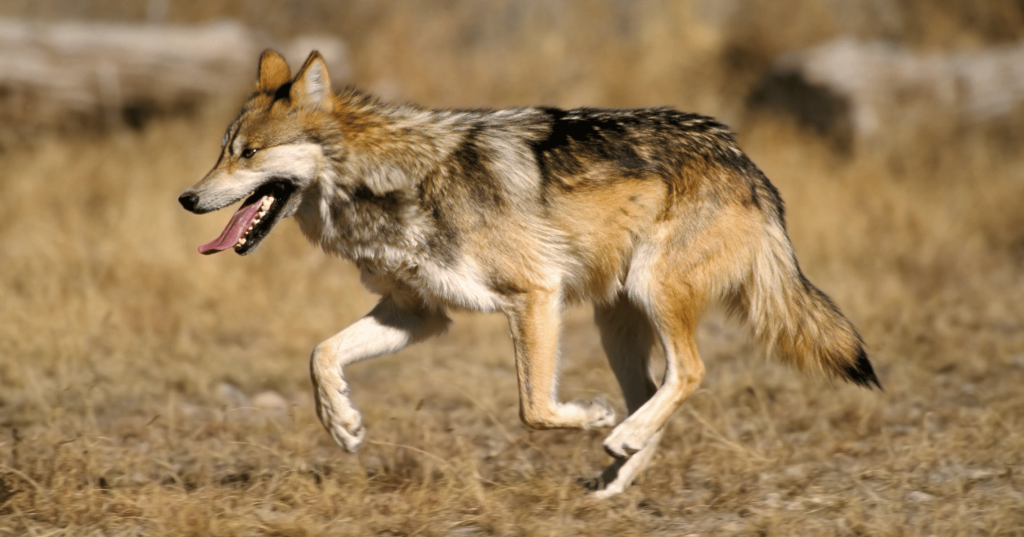
ELEPHANT BUTTE, N.M. — The Trump administration is pressing states to loosen wolf protections, and a New Mexico state senator says the state should act.
President Donald Trump signed Executive Order 14425, “Supporting America’s Ranchers,” on Sept. 4. It gives Interior Secretary Doug Burgum 90 days, until early December, to determine whether the gray wolf and Mexican gray wolf have recovered enough to be delisted or downlisted under the Endangered Species Act. It also directs Interior to consider changing its criteria for lethal wolf removal. And it calls on the White House and the Agriculture Department to encourage states to drop their own wolf protections.
Agriculture Secretary Brooke Rollins followed with outreach urging states to review state-specific wolf protections, work more closely with livestock producers and partner with USDA on wolf predation. That includes lethal removal when requested by the appropriate authorities and allowed by law.
“As ranchers await federal clarity on this issue, I am urging states to listen to their producers,” Rollins said.
USDA also said the Farm Service Agency has raised Livestock Indemnity Program payments for qualifying predation losses to 100% of market value.
Sen. Crystal Brantley, R-Elephant Butte, said New Mexico should take the cue.
“This reintroduction has been an experiment for nearly three decades, and the experiment has given us its results,” Brantley said. “A program with no off-ramp isn’t recovery. It’s time to manage wolves the way we manage mountain lions and bears.”
Brantley said the Mexican wolf population “has grown well past original recovery targets.” The most recent count by state and federal wildlife agencies found a minimum of 319 wolves in Arizona and New Mexico at the end of 2025, up from 286 a year earlier. The recovery plan calls for an average of 320 wolves a year over four years, a mark the agencies say has not yet been reached. Arizona, New Mexico and the U.S. Fish and Wildlife Service are preparing a downlisting petition.
Brantley said she has been working with Trump administration officials on how the Mexican gray wolf is managed. She said she and Rep. Gail Armstrong, R-Magdalena, secured state funding for a livestock loss indemnity program, and that Catron, Sierra and Socorro counties have each declared a public safety disaster over Mexican wolves.
“Indemnity will never be enough,” Brantley said. “You can’t put a check in an envelope and make a family whole for their herd, their safety or their peace of mind. This isn’t abstract for me. A wolf bedded down in my daughters’ playhouse on our ranch and had to be removed for their safety. When my staff traveled to Reserve this summer, the outfitters, guides, game processors and ranchers there told me the same thing: it’s time to reevaluate how we manage this species going forward.”
She urged the state Department of Wildlife, formerly Game and Fish, and the State Wildlife Commission to review New Mexico’s protections and meet with ranchers, hunters and local leaders.
Wolf advocates disagree. “Mexican wolves are not ready to be downlisted or delisted,” Greta Anderson, deputy director of Western Watersheds Project, said, according to the Santa Fe New Mexican. The newspaper also reported that New Mexico law bars killing wolves, so state protections would remain even if federal protections were lifted.