
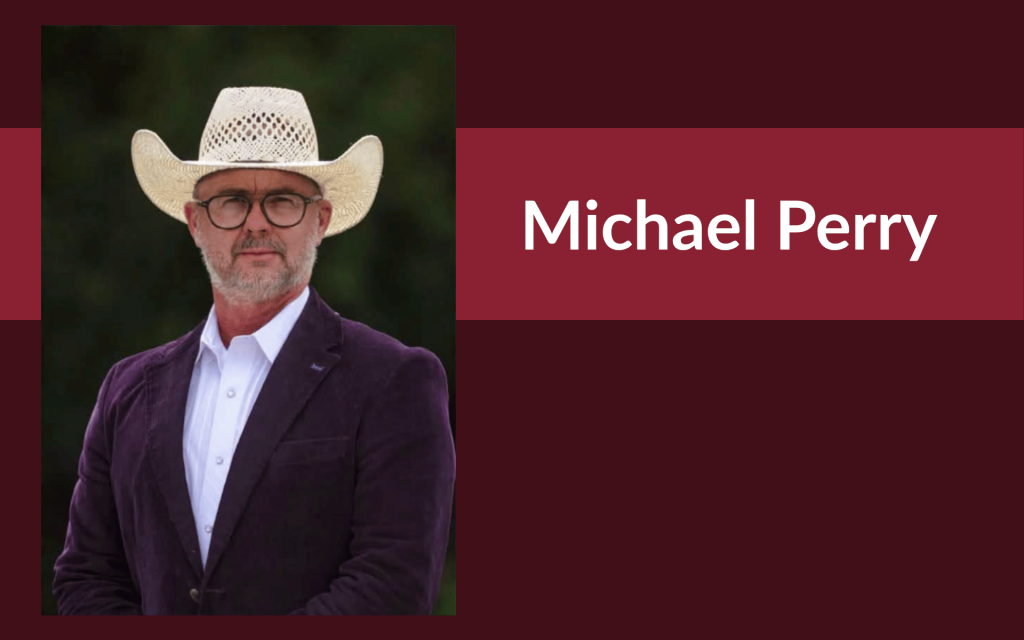
By Michael Perry
Republican Candidate for New Mexico Commissioner of Public Lands
I’ve spent most of my adult life working on New Mexico’s lands, alongside game wardens, ranchers, farmers, conservationists and hardworking people who make their living from our natural resources.
One thing I’ve learned is that your word means something.
You either did the work or you didn’t. You either earned the title or you didn’t. And when someone puts their trust in you, you had better be able to back up what you say.
That’s why I believe New Mexicans deserve a closer look at the qualifications of my opponent, Juan de Jesus Sanchez III.
I’m not talking about political differences. I’m talking about honesty, experience and whether someone’s public account of their qualifications matches the records.
Over the past several weeks, I’ve reviewed government contracts, payment records, a résumé Sanchez submitted to the State of New Mexico, and statements he has made in interviews and on his campaign website.
And I keep coming back to the same question: Why does the experience being presented to voters sound so different from the experience documented in these records?
Let’s start with his education.
In May 2018, Sanchez submitted a résumé to the New Mexico Department of Finance and Administration listing two graduate programs at the University of New Mexico: a Master of Water Resources and a Master of Community and Regional Planning. Both were identified as in progress.
There’s nothing unusual about attending graduate school while working. But there is a difference between pursuing a degree and earning one.
In his 2026 Albuquerque Journal interview, Sanchez acknowledged that he never completed his master’s degree in water resources, saying he accepted a job with the U.S. Army Corps of Engineers before writing his thesis.
But what happened to the second master’s program listed on his résumé? A LinkedIn profile previously provided to us listed both master’s degrees without clearly identifying them as unfinished. If neither degree was awarded, why were they presented that way?
I’m not questioning anyone’s decision to leave graduate school. I’m questioning whether a candidate’s professional qualifications are being accurately represented.
A college degree is something you earn. And if you are asking New Mexicans to trust you with one of the most important offices in state government, you should be able to clearly explain which degrees you actually completed.
Then there’s his experience with the U.S. Army Corps of Engineers. Sanchez has described himself as a natural resources specialist and ranger at Cochiti Lake. But federal employment information we obtained identifies his official position differently.
According to an employment verification response attributed to the U.S. Army Corps of Engineers Human Resources Directorate, Sanchez worked at the Cochiti Lake Project Office from July 18, 2018, through Nov. 8, 2019, less than 16 months. His official job classification was GS 0499 07 Student Trainee (Natural Resources Specialist), and the response reportedly identifies no other job titles during that period.
A student trainee classification is not the same as a separately established ranger position. If Sanchez performed ranger duties as part of his training, he should explain that. If he held another position, he should identify where and when.
What projects did he manage? What responsibilities did he hold? Did he supervise employees or oversee budgets?
Those are questions any employer would ask when evaluating someone’s qualifications for a major management position. New Mexico voters deserve the same answers.
Now let’s talk about the New Mexico Acequia Commission. On his campaign website, Sanchez claims he spent five years advocating for New Mexico’s traditional irrigation systems through the Acequia Commission. In an Oct. 16 interview with KRWG Public Media, he described himself as a technical consultant.
But the government contracts we obtained show a more specific employment history. His May 2018 résumé identifies him as an Assistant to Technical Consultant with Motiva Corporation beginning in March 2018. Then, in August 2018, DFA awarded Sanchez his own professional services contract to provide technical assistance to the commission. The contract had a maximum value of $20,000, at $40 per hour, and identified him as an independent contractor.
His responsibilities included preparing reports, drafting correspondence, coordinating meetings, conducting research and developing policy recommendations. That contract expired June 30, 2019.
The following month, DFA approved Sanchez as a subcontractor under Robert Apodaca’s contract for fiscal year 2020.
Those documents establish a direct professional services contract followed by approval for a subcontract arrangement. They do not establish five years of paid professional service.
So where do the five years come from?
Were there additional contracts? Was he formally appointed to another position? Was some of that time volunteer advocacy?
His campaign website uses the word “advocating,” which can include unpaid participation. But five years of advocacy and five years of professional contracting are not necessarily the same thing.
The financial records raise additional questions.
Motiva Corporation, through Robert Apodaca, held a separate $49,000 professional services contract involving the Acequia Commission for the period from July 1, 2018, through June 30, 2019. During that same period, Sanchez held his own DFA contract with a maximum value of $20,000.
To be clear, those were contract maximums, not proof that the entire amounts were spent. Sanchez’s direct contract payment register identifies 11 payment requests totaling $5,112.37.
But Sanchez’s résumé says he was already assisting Motiva Corporation with commission work before receiving his own DFA contract.
So what work was he doing for Motiva, and what work was he doing under his separate contract? Were those assignments distinct?
I’m not suggesting that having two contracts involving the same commission proves wrongdoing. It doesn’t.
But taxpayers deserve to know how public funds were spent, particularly when a candidate is relying on that work to establish his qualifications for statewide office.
There is another unanswered question.
An initial Inspection of Public Records Act response from DFA reportedly stated that no responsive records had been located concerning Sanchez’s commission service. Yet additional requests subsequently produced contracts, payment records and other documents identifying his work.
Why weren’t those records located in the original search?
That’s a question DFA should answer. And Sanchez should explain the difference between his documented contractual responsibilities and the five years of commission advocacy described on his campaign website.
Then there is the ranching experience.
Sanchez’s campaign website describes him growing up working on his family’s ranch, hauling hay, cleaning acequias and herding cattle. He also told the Albuquerque Journal that he grew up working cattle on a ranch that included state trust land.
But his May 2018 résumé goes further.
It identifies him as an associate at Lazy JS Ranch in Abo, New Mexico, beginning in May 2012, with responsibilities involving irrigation strategies, sustainability planning, management of a 6,000-acre ranch, cattle management plans and agricultural restoration projects.
Those are substantial claims. They describe more than growing up around a ranch. They describe professional responsibilities involving land and livestock management.
On Oct. 26, the New Mexico Sentinel published an opinion article written by John Trahan, who identifies himself as Sanchez’s cousin. Trahan disputes Sanchez’s portrayal of his ranching experience and alleges that Sanchez asked to film a campaign commercial on the family ranch but was refused because relatives believed the portrayal would misrepresent his experience.
Those are allegations from a family member, and they deserve a response from Sanchez.
But Sanchez’s own résumé also identifies specific ranch management responsibilities.
Did he develop the irrigation and cattle management plans described there? What projects did he complete? What was his position at the ranch?
I’ve spent my career working with ranchers across New Mexico. I know the difference between being around a ranch and being responsible for managing one.
I’ve watched ranching families make difficult decisions during drought, work through the night to protect livestock, maintain water developments and struggle to keep operations alive for the next generation.
Those are real responsibilities. They shouldn’t be treated as résumé decorations.
There’s nothing wrong with being proud of your family’s ranching heritage. But family history and personal work experience are not interchangeable.
Which brings me to The Santa Fe New Mexican, the newspaper endorsed Juan Sanchez for Commissioner of Public Lands. After reviewing these documents, I have to wonder how thoroughly its editorial board examined his qualifications before recommending him to voters.
Did anyone verify whether either master’s degree was awarded? Did anyone compare his public description of his Army Corps experience with his official federal job classification? Did anyone examine the dates of his Acequia Commission contracts or independently verify the ranch management responsibilities listed on his résumé?
We’re talking about electing someone to oversee an agency whose decisions affect agriculture, energy development, conservation and funding for New Mexico’s public institutions. Before recommending a candidate to voters, shouldn’t a newspaper make sure the qualifications it’s relying on are accurate?
New Mexicans deserve that much from both their candidates and the newspapers that endorse them.
Now let me tell you what experience actually looks like.
I graduated from New Mexico State University with a Bachelor of Science in Wildlife Science and a minor in Criminal Justice.
I spent more than 20 years with the New Mexico Department of Game and Fish, beginning as a game warden and eventually serving as Major of Southern Field Operations. I supervised conservation officers, oversaw field operations, protected wildlife and worked directly with landowners throughout southern New Mexico.
I later served as Assistant Commissioner of Field Operations at the New Mexico State Land Office.
I wasn’t learning about the agency from a campaign briefing. I was working alongside its employees, overseeing field operations, addressing access issues and helping manage the lands entrusted to the state.
During my time there, our work included restoring approximately 9,300 acres of critical watersheds, removing invasive species, addressing abandoned caliche pits in Lea and Eddy counties and overseeing approximately 3,500 agricultural leases.
Throughout my career, I’ve also worked to improve public access to land that had been difficult or impossible for sportsmen and other New Mexicans to reach.
In Catron County, I worked with the State Land Office, Rocky Mountain Elk Foundation and Department of Game and Fish on the Luera Road Access Project, helping preserve access to approximately 60 sections of land. At Graham Springs in Chaves County, we helped restore access to approximately 80 sections of federal and state trust land. At Whites Peak in Mora County, we worked with partners to address access to approximately 12,000 acres of landlocked state trust land. And at Monte Prieto in Socorro County, a cooperative project helped open access to another 107 sections.
Those projects required more than talking about public access. They required identifying legal routes, negotiating with landowners, coordinating with government agencies and conservation organizations, and finding solutions that respected private property while expanding opportunities for the public.
For more than a decade, I’ve also owned and operated Wildlife and Habitat Prescriptions, working with ranchers and landowners throughout New Mexico on watershed restoration, vegetation management and habitat improvement.
Today, I serve as Vice Chair of the Chaves County Commission and as a member of the National Association of Counties Public Lands Advisory Committee.
I have nearly three decades of government experience and more than three decades working in natural resource management.
I’ve supervised employees, managed budgets, overseen projects, worked with state and federal agencies and operated my own business.
My qualifications aren’t based on what I say I might have done. They’re based on what I’ve actually done.
This election should be about qualifications, not storytelling.
The Commissioner of Public Lands is responsible for decisions affecting agriculture, energy development, conservation, land access, public education funding and the long-term stewardship of state trust lands.
This is not an entry-level position.
It requires judgment, experience, leadership and an understanding of the people who depend on our land.
I’ve spent my career working with those people. I’ve seen what happens when decisions are made by people who don’t understand the land or the consequences of their actions. I’ve also seen what can be accomplished when experienced people work together to solve problems.
That’s why qualifications matter.
And that’s why honesty matters even more.
I don’t expect my opponent to have the same experience I have. But I do expect him to accurately represent the experience he does have.
If Sanchez earned either master’s degree, he should identify when it was awarded. If his Army Corps experience included responsibilities beyond those documented under his student trainee classification, he should explain them. If he spent five years working with the Acequia Commission, he should explain what those five years consisted of. And if his résumé accurately describes substantial ranch management experience, he should be able to identify the projects he completed.
Those are reasonable expectations.
I believe New Mexicans are tired of political candidates who believe an impressive story is more important than an honest record.
I’ve worked alongside people who never earned a college degree but knew more about land, water, wildlife and agriculture than many people with a wall full of diplomas.
Their experience was earned through years of hard work. Their reputations were built on what they accomplished. And when they gave you their word, you could depend on it.
That’s the kind of leadership New Mexico deserves.
A good story might help someone get elected. But it takes real experience, sound judgment and integrity to do the job.
New Mexicans deserve to know the difference.
And before they cast their votes, they deserve answers.