
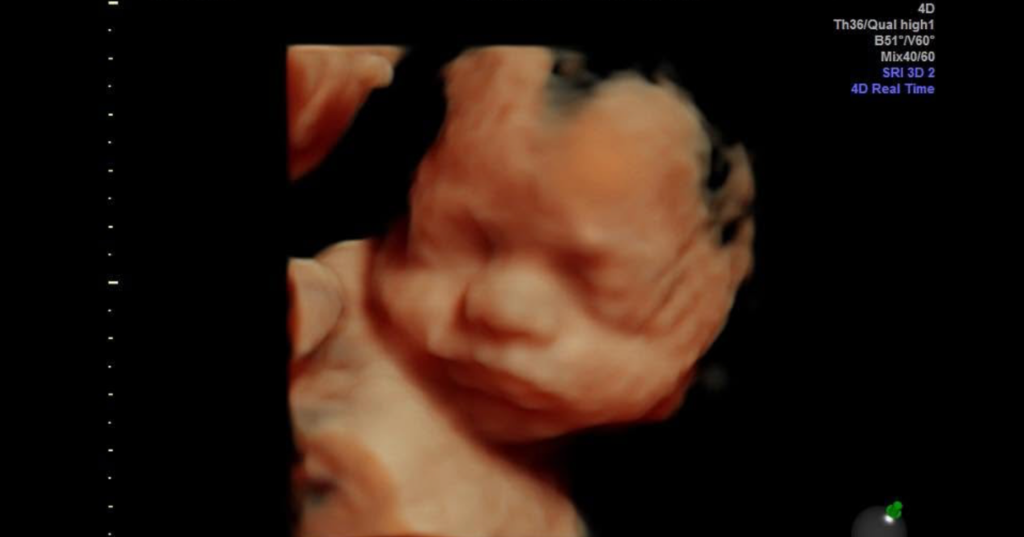
A New Mexico wrongful-death lawsuit involving the estate of a 26-week-old unborn baby has been settled for $200,000, in what attorneys involved describe as the first case in which an aborted child’s estate received compensation through a wrongful-death claim.
The case, Wabbington v. Boyd, centered on allegations that the child’s mother was under the influence of methamphetamine when she consented to an abortion in 2020 and that the abortion providers failed to properly assess whether she could provide informed consent.
The case was settled and dismissed with prejudice Sept. 14, 2026. The lawsuit was brought by Jazell Wabbington, individually and as personal representative of Baby Wabbington’s estate, against abortion providers Curtis Wayne Boyd and Emily Cohen and the estate of the late Carmen Landau. Boyd was doing business at the time at Southwestern Women’s Options, a facility that provides late-term abortions in New Mexico.
The complaint and subsequent court documents were obtained by Live Action News through a New Mexico Inspection of Public Records Act request.
A central issue was the legal status of Baby Wabbington. A final order appointing a personal representative stated that the baby was a 26-week viable fetus and, under Salazar v. St. Vincent Hospital, was considered a “person” under New Mexico’s Wrongful Death Act and entitled to equal protection under New Mexico and federal law.
Medical malpractice attorney Mike Seibel, who represented Wabbington with co-counsel Justin Hall, said the case was significant because both the mother and the baby’s estate brought claims.
“This is the first time that an abortionist has ever been sued for the wrongful death of a baby,” Seibel told Live Action News. “There have been numerous cases for injuries to the mother, but in this case both the mother and the baby’s estate sued.”
According to the complaint, the providers knew or should have known about the mother’s methamphetamine use. The lawsuit alleged that she had previously disclosed her drug use and that a counselor documented that she appeared anxious and avoided eye contact.
The complaint alleged that providers nevertheless attempted to obtain her consent while she was intoxicated and failed to discuss alternatives, including continuing the pregnancy while receiving support to stop using methamphetamine and treatment for substance abuse.
Seibel said the records showed “nondiscussion of reasonable alternatives including continuing the pregnancy with meth cessation support and referral to treatment.”
The lawsuit further alleged that the mother’s condition prevented her from fully understanding the consent agreement and that providers failed to recognize that she was not legally competent to provide consent while intoxicated.
The complaint also raised concerns about the baby’s remains. According to the lawsuit, the mother requested that the remains be released to Riverside Funeral Home for funeral services. Instead, the complaint alleged, “the body was placed in a medical waste container and destroyed.”
Seibel pointed to informed-consent guidance from the American College of Obstetricians and Gynecologists and the National Abortion Federation. The National Abortion Federation’s 2026 Clinical Guide states that patients should receive accurate information about abortion, alternatives, risks and benefits and have an opportunity to have their questions answered before the procedure.
“This omission deprived the patient of material information needed to make an informed decision,” Seibel said.
Seibel argued that the case highlights what he views as an inconsistency in New Mexico law: an unborn child can be treated as a “person” for purposes of a wrongful-death claim while abortion remains legal.
He said the settlement could have implications for future informed-consent cases involving abortion and pregnant women experiencing substance-use disorders.
Because the case was settled rather than decided at trial, the $200,000 agreement does not constitute a judicial finding that the defendants were liable for the allegations in the complaint.
Worldwide, an estimated 73 million induced abortions take place each year, according to the World Health Organization.
The case highlights a central question in the abortion debate: What is the unborn?
If the unborn are human, then abortion is a matter of life and death, one that ultimately hinges on society’s view of human nature itself. In the abortion debate, personhood is often tied by pro-choice advocates to cognitive abilities rather than to the fundamental question of what the unborn are: human beings.