SANTA FE, N.M. — New Mexico House Democrats are proposing a $2 million state investment to eliminate an estimated $200 million in medical debt, potentially reducing the debt of as many as 160,000 residents over three years.
The proposal, announced Oct. 30, would establish a partnership with Undue Medical Debt, a national nonprofit organization that purchases outstanding medical bills from health care providers and collection agencies at discounted rates before canceling the debt.
House Democratic leaders say the program could benefit between 100,000 and 160,000 New Mexicans, although the amount of debt eliminated would depend on the availability of qualifying accounts.
Unlike traditional financial assistance programs, residents would not need to apply for relief. The nonprofit would identify eligible accounts, purchase the debt and notify patients after their balances had been canceled.
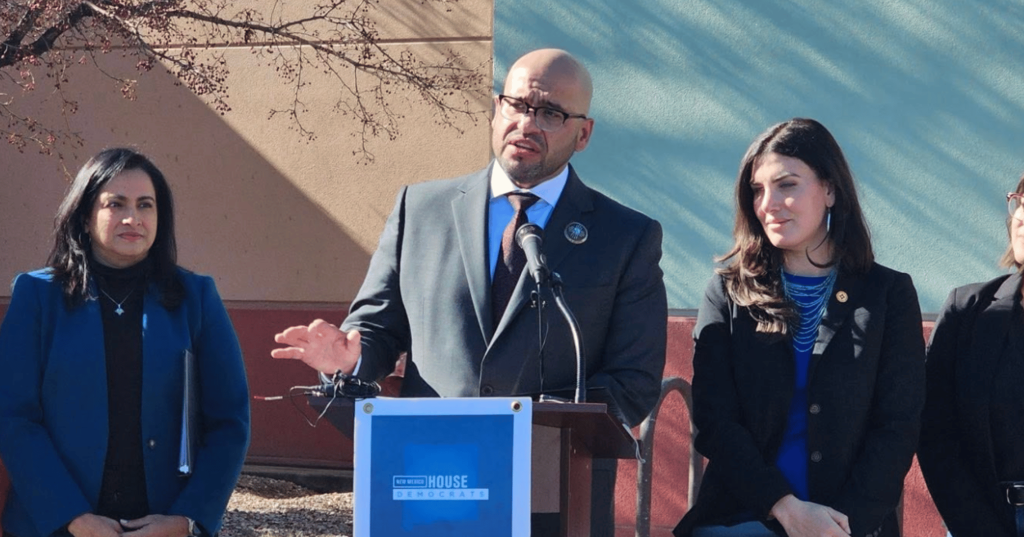
“Every New Mexican deserves the chance to recover from an illness or injury without carrying the burden of unmanageable medical debt for years afterward,” House Speaker Javier Martínez, D-Albuquerque, said in a statement announcing the proposal.
Under the proposed program, households would qualify if their income is at or below 400% of the federal poverty level, approximately $132,000 annually for a family of four, or if their medical debt exceeds 5% of household income.
The program would target existing medical debt rather than provide direct payments to patients or cover future medical expenses.
The nonprofit can purchase debt at substantial discounts because hospitals and collection agencies frequently accept reduced payments for accounts they consider unlikely to be collected.
Rep. Nathan Small, D-Las Cruces, chairman of the House Appropriations and Finance Committee, said similar programs demonstrate how relatively modest government expenditures can eliminate much larger amounts of outstanding debt.
“A well-designed program can bring that relief to New Mexicans while also making careful use of public dollars,” Small said.
Several states, including Illinois, Arizona and Michigan, have implemented similar initiatives. Illinois reported eliminating more than $1.4 billion in medical debt through a program funded with $10 million in federal pandemic relief money.
Undue Medical Debt also has operated in New Mexico, announcing in 2025 that it had canceled approximately $63 million in medical debt using private donations.
However, the estimated $200 million in relief is not guaranteed. The nonprofit can purchase only debt that providers and collection agencies agree to sell, making the program’s results dependent on participating institutions.
Research has also raised questions about the broader financial benefits of medical debt cancellation. A 2025 study published in the Quarterly Journal of Economics examined $169 million in debt relief provided to more than 83,000 people. Researchers found no average improvements in financial well-being, physical or mental health, or health care utilization, although some participants experienced modest improvements in credit access. The study examined older debt already in collections.
Medical debt remains widespread. An Urban Institute report published in October found that more than one-quarter of American adults reported medical debt for themselves or family members in December 2025.
Martínez has indicated the proposed $2 million appropriation could be included in the state budget during the legislative session beginning Jan. 19, 2027.
The proposal would require approval from the Legislature and Gov.-elect Deb Haaland before taking effect. No funding has been approved.